

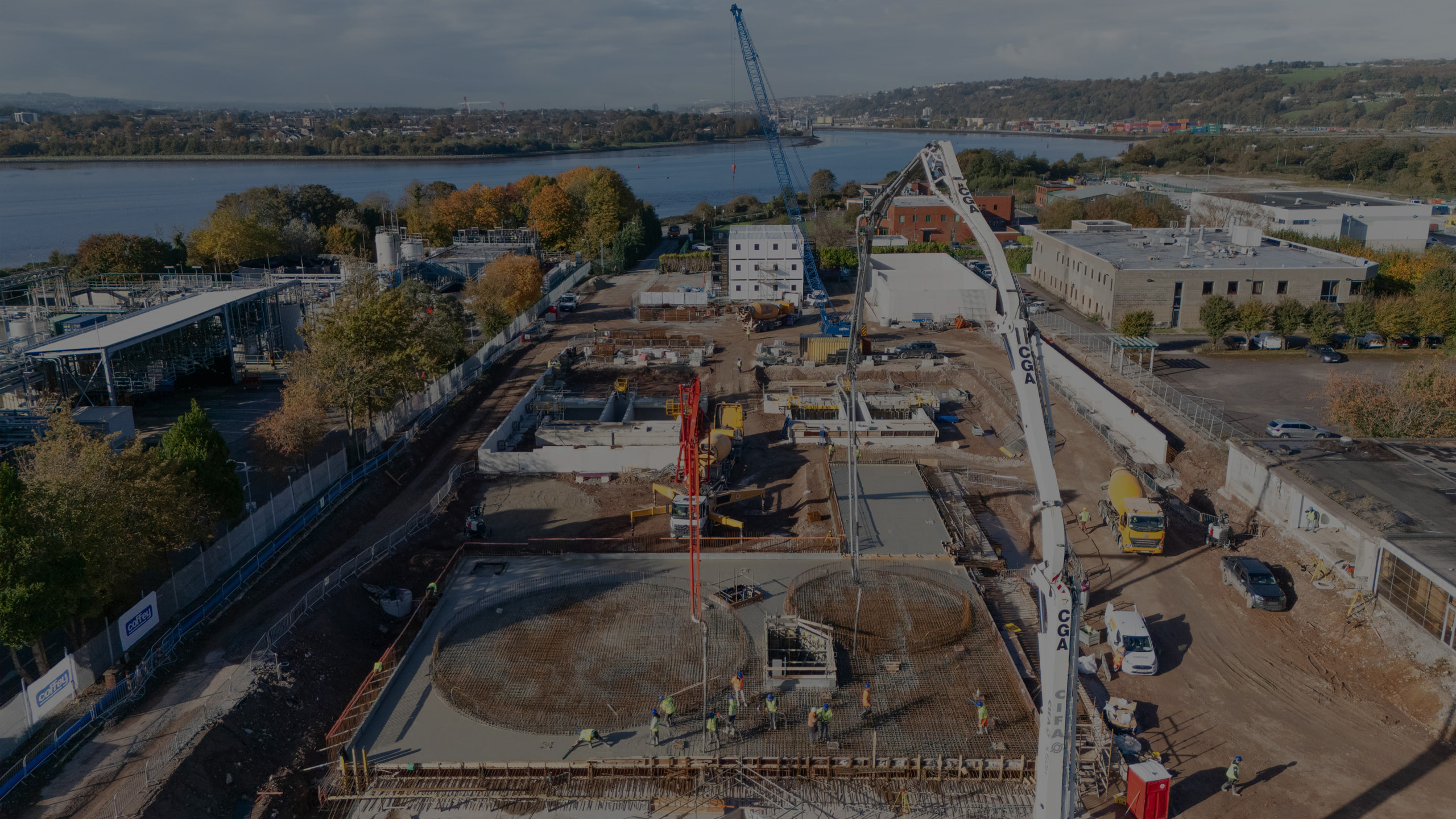

Pioneer portfolio company, Stream BioEnergy Ltd, a leading developer, owner, and operator of renewable biogas facilities in Ireland and the UK, is constructing an €80m biomethane plant in Little Island, Cork.
National significance
When operational in 2027, the facility will process 90,000 tonnes of domestic and commercial food and garden waste per year. It will reduce GHG emissions by 40,000 tCO2e/annum[1], while delivering more than 80GWh of renewable biomethane annually to the Irish National Grid, making it Ireland’s largest biomethane facility processing municipal food and garden waste, and meaningfully contributing to the Government’s 2030 targets under the National Biomethane Strategy.
As well as producing renewable gas that will replace the use of fossil fuels in hard to abate sectors, i.e. heating and transport, the facility will produce sustainable biofertilisers by recycling nutrients from food waste, thereby supporting more sustainable farming and food production.
The project is underpinned by a robust commercial model, which is also well-positioned to supply renewable biomethane into Ireland’s forthcoming Renewable Heat Obligation (RHO) scheme[2]. The prompt agreement between the Irish Government and the European Commission on the detail of the RHO is critical to ensure the legislative process can be completed to protect and grow Ireland’s biomethane sector.
Blue-chip partners
The project is being built under an EPC contract by Kanadevia Inova AG (formerly Hitachi Zosen Inova) and Coffey Group, one of Ireland’s largest construction companies. Centrica’s Bord Gáis Energy has secured the gas off-take contract for the facility, while some of the largest national and regional waste collection companies will supply waste to the facility.
Project Funding
Funding for this project has been provided by Pioneer Infrastructure Partners SCSp and Goldman Sachs Asset Management, with whom Stream recently completed a portfolio level debt raise of more than €75m. KVI (the EPC contractor) has also taken a minority stake in the project.
Local benefits
A significant proportion of the €80 million capital spend will be directed to local civil, mechanical and electrical contractors and, once operational, the facility is expected to generate around €4 million in annual local expenditure, supporting ongoing economic activity in the area. The project will create more than 100 construction jobs and more than 20 permanent operational roles at the facility, along with a range of jobs across the project supply chain.
Stream BioEnergy emerging as a market leader
The construction of the facility marks a key milestone for Stream BioEnergy as it delivers on its strategy to build a leading biomethane platform across Ireland and the UK. Together with its operational plants in Northern Ireland and Scotland and pipeline of large-scale projects across Ireland and the UK, the Little Island facility cements Stream BioEnergy’s position as a leading developer and operator of renewable gas infrastructure in the two markets.
Kevin Fitzduff, Co-Founder of Stream BioEnergy, commented:
“At a time when Ireland is under enormous pressure to decarbonise its heat and transport sectors, we are proud to have started construction on one of Ireland’s largest biomethane facilities and welcome the resounding support from our investors, commercial counterparties, Cork County Council, the local community and all our other stakeholders. This project will significantly contribute to Ireland’s decarbonisation efforts and make the country a more energy secure environment in which to live and conduct business.
“There is now a clear need for the Irish Government and the European Commission to swiftly reach an agreement on the RHO so that the future of Ireland’s biomethane sector is protected and can grow over the long term. We are calling for a practical solution that would ensure only truly unsubsidised biomethane is eligible for import into Ireland under the RHO, preventing historically subsidised European supply from undermining Irish-produced biomethane and giving the domestic sector the support it needs to scale.”
[1] A standard unit of measurement used to express the impact of different greenhouse gases (such as methane, nitrous oxide, and others) as a single value.
[2] The RHO is a proposed Irish policy requiring heat fuel suppliers to include a growing share of renewable energy to decarbonise heat and support climate targets.